
By Porter Lang
If you buy wool for winter, you read the label and the history behind it. Here is the history, in the order the sources give it, with the soft spots marked.
The first plant
According to Wikipedia, the predecessor company, the Pendleton Wool-Scouring and Packing Company, was established in Pendleton, Oregon, in 1893 as a wool scouring plant. Scouring is the washing of raw wool. In 1895 the operation was enlarged and converted into a textile mill, and the article notes that some sources give 1895 as the company’s founding year. That is a real disagreement, and we leave it where it is.
Dates in order
- 1893: the scouring plant is established in Pendleton.
- 1895: the plant becomes a textile mill.
- February 16, 1909: the company is incorporated in Pendleton, under the Bishop family, according to a 1974 source the article cites.
- 1912: a weaving mill opens in Washougal, Washington, to make woolen fabrics for suits and clothing.
- 1919: headquarters moves to Portland, Oregon.
- 1924: men’s woolen sport shirts go into production; by 1929 there is a full line of woolen sportswear.
- 1949: a women’s line launches, and the ’49er jacket becomes popular.
- 1961: a group takes the name Pendletones, inspired by the company’s plaid shirts, and later becomes The Beach Boys.
- 1972: non-wool garments for men and women are introduced.
The family behind it
Wikipedia says Thomas Lister Kay was an English-born weaver who founded the Thomas Kay Woolen Mill in Salem, Oregon. His daughter, Fannie Kay Bishop, pushed her sons to buy the defunct mill. That connection explains the Bishop name in the 1909 incorporation. It is a small story, and the article tells it in a few lines.
A blanket cross-reference
Wikipedia says Pendleton emulated the multicolor candy-stripe patterns of Hudson’s Bay point blankets for its Glacier National Park blanket. We include it only because the pattern idea is documented, and we leave out the rest of the blanket history. The article marks one trade-blanket claim as lacking a citation, so we do not repeat it.
Reading a wool label
Our reading is that the dates above are useful to a buyer for one reason: they show that the company moved from washing wool, to weaving it, to cutting it into shirts and jackets over about three decades, between 1893 and 1924. A shirt from the 1920s onward belongs to a company that already ran a mill. The page we loaded does not say where any current garment is woven, how it is finished or how to care for it, so we offer no care instructions. Follow the label.
Counting the years
Our reading of the timeline is simple arithmetic. From the 1893 scouring plant to the 1909 incorporation is 16 years. From the 1909 incorporation to the 1924 shirts is another 15. The Washougal mill opened 19 years after the plant, the move to Portland came 7 years after Washougal, and the women’s line arrived 25 years after the shirts. None of that says anything about quality. It shows that the company changed what it did about every decade or two and kept the mill at the center.
Two states, one name
The article places the original site in Pendleton, Oregon, the weaving mill in Washougal, Washington, and the headquarters in Portland, Oregon. A garment with the Pendleton name could therefore connect to three places, depending on the era. The page does not say which site made which product line after 1912, and it would be a guess to match them up, so we do not.
A practical note on wool and the cold months
The page we read has nothing on the fiber itself, such as fineness, weight or finish, and nothing on washing. Look to the garment’s label for those, and to the brand for care advice. We are a curator, not a stockist, and we point to no particular product here.
What kind of sources these are
We loaded one source, Wikipedia, a collaboratively edited encyclopedia, and parts of it cite older secondary works. We could not load the company’s own history, a museum record or a trade body page. This is a Wikipedia-only piece. Some details people attach to the brand, such as an 1863 founding date, are not on the page we read, so we leave them out.
Questions a buyer would ask
When was Pendleton founded? According to Wikipedia, it depends on the source: 1893 for the scouring plant, 1895 for the mill, and 1909 for the incorporation.
Where is it made? The article names the Pendleton, Oregon, and Washougal, Washington, sites by date. It does not say what is made where today.
Is the plaid shirt old? Wikipedia says men’s woolen sport shirts began in 1924.
What we left out
We left out prices, store locations, and any claim about where current products are made. We left out the trade-blanket claim that the article flags as needing a citation. We left out a story about the shirts and a music group beyond the single dated sentence above.
Quick answers
When did Pendleton start making shirts? According to Wikipedia, men’s woolen sport shirts began in 1924, and a full woolen sportswear line existed by 1929.
What was the ’49er jacket? Wikipedia says a women’s line launched in 1949 and the ’49er jacket became popular. It gives no further description.
Where is Washougal? Wikipedia places the 1912 weaving mill in Washougal, Washington.
Related on this site: berea-kentucky-folk-arts-crafts-capital, rookwood-pottery-cincinnati-glazes-and-history, snowflake-bentley-jericho-vermont-photographs
Roam first. Shop later.
Shop Sephari Picks
As an Amazon Associate we earn from qualifying purchases. Some items below are sponsored affiliate products.
 Wanderer Leather Trolley Suitcase
$350.00
 Leather Carry-On Trolley Bag
$499.00
 The Peterson Leather Duffle
$140.00
Ad
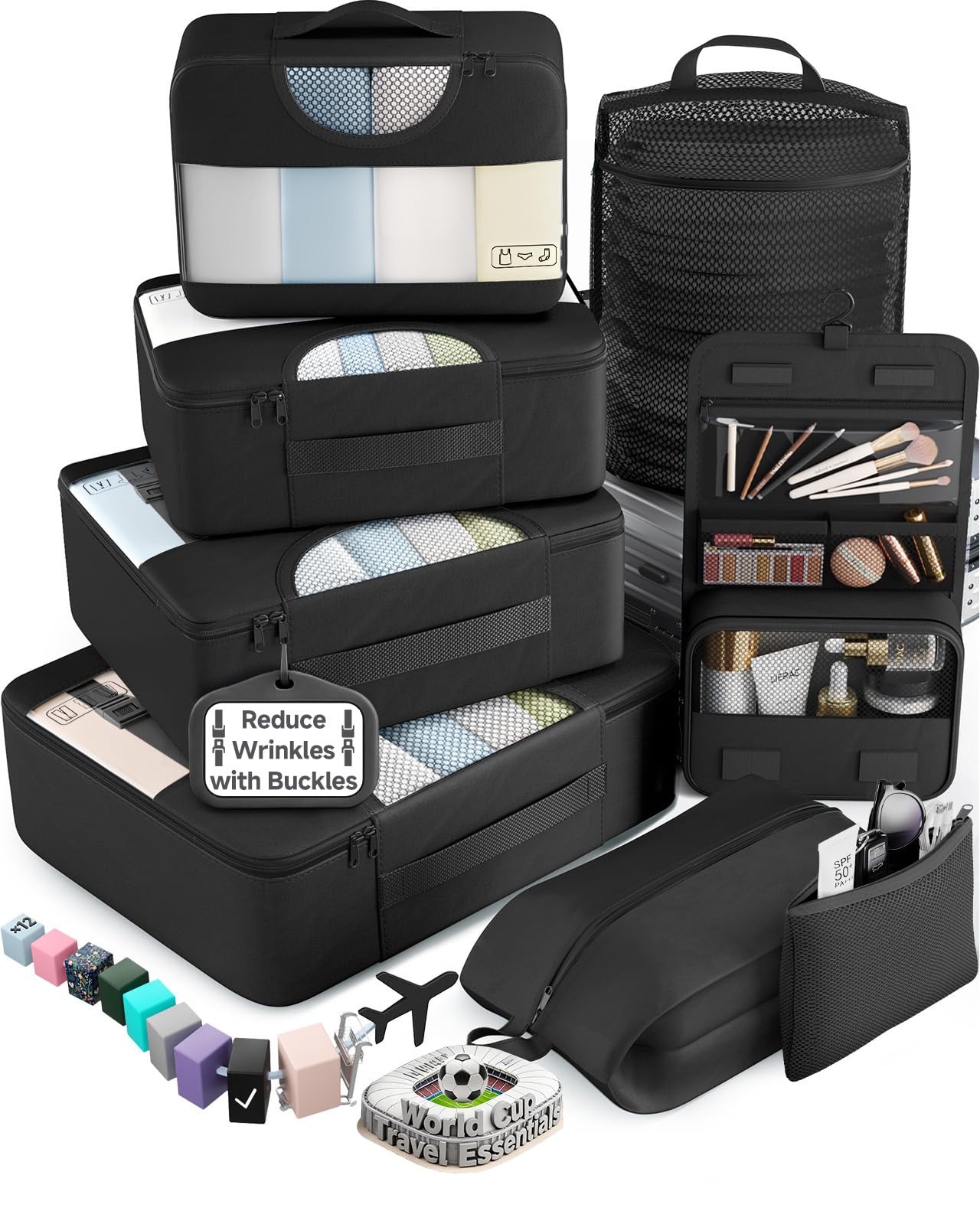 Veken 8-Set Packing Cubes for Travel
on Amazon
 Tan Leather Trolley Bag 44L
$240.00
 Traveler Weekender Duffle
$120.00
 Walker Leather Weekender Bag
$130.00
Ad
 Ringsun Genuine Leather Luggage Tags (2-Pack)
on Amazon
 Nocona Hiker Men's Belt
$42.00
 Waterline Braided Belt
$35.00
 Teddy Cattleman Cowboy Hat
$156.00
Ad
 SURE LOCK TSA-Approved Luggage Locks (2-Pack)
on Amazon
 The Sierra Satchel
$59.99